
Limbus Company
Project MoonStrategy
4.63.55K Reviews
- Version
- 1.112.1
- Installs
- 1.00M
- Age Rating
- Mature 17+
Screenshots


Our Review of Limbus Company
 Analysis by Appyee
I went into Limbus Company expecting a dark mobile strategy game that would be easy to sample and then forget. Instead, I found a demanding, story-heavy RPG with a very particular rhythm: it asks me to pay attention, learn its combat language, and accept that progress is more satisfying when I understand why a decision worked. That makes its first hours unusually memorable, but it also raises an important question: does it still deserve space on a phone after the novelty wears off?
My answer is yes, with qualifications. This is not a casual game for filling every spare minute, and it is not the best choice if I want instant victories, a cheerful tone, or a simple team-building loop. It is a free strategy game from Project Moon, rated Mature 17+, and its appeal depends heavily on its writing, atmosphere, and layered battles. I would recommend it to players who enjoy learning unusual systems and revisiting a game over time, rather than to anyone looking for a low-effort daily distraction.
Why the first week feels so different
The opening stretch works because the game has a strong identity from the start. Its world is bleak, strange, and often uncomfortable, but it is not presented as empty gloom. The characters carry distinct personalities, arguments, habits, and emotional damage, so the journey feels more like a tense road story than a sequence of disconnected missions. I found myself continuing not only to improve my roster, but also to see how the group would react to the next situation.
The writing can be deliberately theatrical. Conversations may shift from absurd humor to violence without much warning, and the game is comfortable leaving some scenes unsettling rather than neatly resolved. That tone is one of its biggest strengths, though it is also why the Mature 17+ rating matters. Anyone sensitive to graphic conflict, disturbing themes, or bleak character situations should know that the atmosphere is central to the experience, not decoration around the combat.
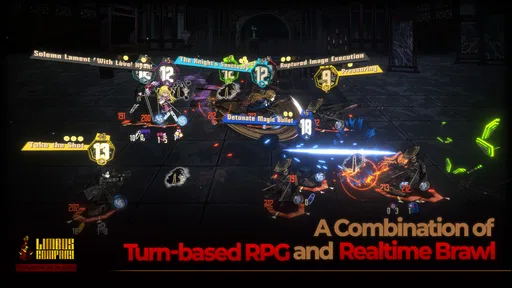
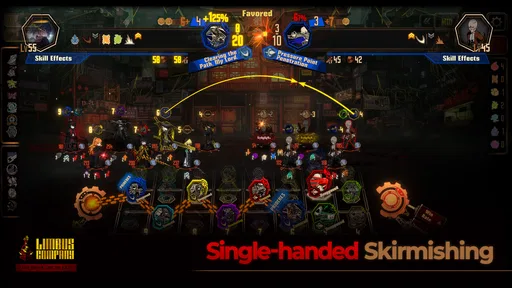
Combat is where the first real learning curve appears. Instead of treating every battle as a simple exercise in selecting the strongest attack, I had to watch how actions interact, decide which clashes were worth contesting, and think about the order in which abilities should happen. The game rewards reading the battlefield before tapping through turns. A powerful-looking move can be the wrong choice if it leaves an important character exposed or prevents a more useful sequence later.
That initial complexity is exciting because victories feel earned. When I lost, I could usually identify a poor decision rather than blame an invisible difficulty spike. The best early habit is to slow down and inspect the available actions before committing. I also recommend resisting the temptation to replace a familiar character immediately just because a new option looks impressive. Understanding a smaller group is often more useful than owning a larger group I have not learned to operate.
The game’s strategy layer becomes clearer when I stop thinking in terms of individual attacks and start thinking about resources, timing, and compatibility. Each encounter encourages me to consider what I need now versus what I may need a few turns later. That makes ordinary fights more mentally active than the usual mobile RPG routine, where a recommended team and an automatic button can solve most problems.
There is also a satisfying sense of discovery in experimenting with different combinations. I enjoyed testing how a change in the team altered the flow of a battle, especially when a character who seemed modest at first became valuable in a particular situation. This is one of the less obvious reasons to keep playing: the roster is not merely a collection of higher numbers. It gives me different ways to approach the same kind of problem.
Still, the first week is not frictionless. The interface presents a lot of information, and the terminology takes time to settle in my memory. New players who are used to straightforward turn-based games may wonder why a battle that looks manageable suddenly turns against them. My advice is to treat the early campaign as a tutorial that continues after the formal tutorials end. Read descriptions, observe the result of each decision, and do not assume that the most dramatic visual effect is automatically the most valuable move.
The free entry point helps with that experimentation. I can begin without paying, learn whether the writing and combat suit me, and decide later whether optional spending feels worthwhile. The presence of in-app purchases ranging from $0.99 to $79.99 per item means I would still approach the store carefully. The game is most enjoyable when I am making strategic choices, not when I feel pushed into solving a difficult moment with a purchase.
What makes the routine worth returning to
After the opening excitement fades, the game’s lasting value comes from the relationship between story progress and mechanical understanding. I do not simply finish a chapter and move on with a stronger party. I gradually learn which tools fit my preferred style, which encounters punish careless planning, and which characters become more interesting when used in a different role. That kind of progress is slower than a conventional power climb, but it feels more personal.
A realistic use case is a short evening session after work or school. I might have enough time for a few battles, but not enough energy for a long action game. Limbus Company can fit that situation when I want focused engagement rather than background entertainment. I can work through a difficult encounter, stop after a story segment, and return later with a clearer plan. It is less suitable when I am commuting with an unstable connection or trying to play while distracted, because the combat asks me to notice details.
The game also suits players who enjoy replaying a problem mentally. After a defeat, I often found myself thinking about the turn where the situation slipped away. That is a good sign for a strategy title: the loss creates a question I want to answer. The trade-off is that players looking for a relaxing power fantasy may experience the same design as unnecessary work. Not every session feels rewarding, especially when I am tired and would rather watch the game resolve itself.
Compared with many mobile RPGs, this one places more weight on interpretation. The story is not just a reward between battles, and the battles are not just interruptions between character scenes. The two sides support each other. The grim setting gives the fights emotional context, while the combat gives the characters’ struggles a practical shape. Compared with a traditional console strategy RPG, however, the mobile structure can feel more fragmented. It is easier to play in pieces, but the surrounding systems and ongoing progression can also make the experience feel less self-contained.
The recurring value is strongest for players who enjoy building knowledge rather than simply collecting content. I like that a familiar encounter can feel easier because I understand it better, not only because my numbers are higher. This is a concrete reason to keep the game installed after the first month. My decisions improve, and that improvement remains useful even when the roster or challenge changes.
Another useful habit is to keep a small personal record of what caused a failed attempt. I do not need a detailed spreadsheet. A note such as “save this resource for the second phase” or “do not commit the fastest character first” can prevent me from repeating the same mistake. That may sound excessive for a mobile game, but it matches the way this title is designed. Players who enjoy learning patterns will get more from it than players who expect every lesson to be explained immediately.
The maintenance cost of keeping up
Long-term enjoyment depends partly on how much attention I am willing to give the game outside individual battles. The main burden is not simply storage or time; it is mental continuity. If I leave for several weeks, I may remember the broad plot but forget the finer points of my preferred team, the purpose of a resource, or the reason a particular strategy worked. Returning is possible, but I should expect a short relearning period.
That makes the game better for a steady habit than for irregular bursts. A few focused sessions each week can keep the systems familiar without turning play into a second job. I would not recommend forcing myself to complete every available task if it starts to feel like administration. The game’s strongest moments come from meaningful decisions, so an overloaded routine can make the experience feel smaller rather than richer.
Version 1.112.1 is the current version I encountered, and the game runs on Android 8.0 or later. Those details make it accessible to a broad range of Android devices, but compatibility alone does not determine comfort. On a smaller screen, reading dense information and checking several options can feel cramped. I would prefer a device where text is easy to read and taps are precise, especially during difficult encounters.
The game’s free price lowers the risk of trying it, but it does not remove the need for discipline around purchases. I would set a personal limit before browsing optional items, particularly because the highest listed price reaches $79.99 for one item. That is not a criticism unique to this title; it is practical advice for any free-to-play RPG with a collectible structure. The healthiest approach is to decide whether I enjoy the core game first, then treat spending as optional support rather than a shortcut to make the game tolerable.
Maintenance also includes keeping expectations realistic. A strategy game with a large cast and continuing progression will naturally ask me to learn new interactions over time. I cannot expect every new addition to fit the same team or produce an immediate improvement. The better question is whether I enjoy investigating those changes. If I see roster management as a chore, the long-term loop will eventually become tiring even if the story remains strong.
One practical way to reduce friction is to keep a reliable “default” team for ordinary play and reserve experiments for moments when I have the patience to study the results. This prevents every session from becoming a full rebuild. I can still explore unusual combinations, but I do not have to pay the mental cost of starting from zero each time I open the game.
Where fatigue begins to replace curiosity
The same depth that makes the game memorable can become its main source of fatigue. Battles are not always difficult because the opponent is powerful; sometimes they are tiring because I need to track several relationships at once. After a long day, I may understand what I should do but lack the concentration to do it carefully. That is when a supposedly short session can feel like homework.
The narrative tone can also wear me down. I appreciate the contrast between grim events and moments of strange humor, but the world rarely offers uncomplicated comfort. Players who want a bright escape may find the constant tension emotionally heavy. Even those who enjoy dark fiction should expect that some chapters may be more draining than entertaining.
Repetition is another concern. Returning to similar activities can feel worthwhile when I am testing a new plan, but less so when I am repeating them only to maintain progress. My solution is to stop treating every available activity as mandatory. I would focus on the content that teaches me something or advances a story I genuinely care about, rather than chasing completion for its own sake.
The game is also not ideal for people who want a fully automatic experience. Auto-style convenience can be useful in many mobile RPGs, but it would undermine much of what I value here if used as the default. The interesting part is deciding how to respond to a battle, not merely watching a prepared team perform. Someone who wants to tap once and let the phone handle the rest should choose a simpler alternative.
There is a social expectation around any popular ongoing game, even when the core experience can be played alone. With over a million installs and an average rating of 4.6 from roughly 77 thousand ratings, Limbus Company clearly has a substantial audience. That visibility can be encouraging, but I would not let community enthusiasm dictate my pace. Guides are useful when I am stuck, yet discovering a solution myself often gives the game more lasting value.
I would also skip it if I dislike reading on a phone. The story is not a thin frame around combat, and rushing through dialogue would remove one of the reasons to tolerate the learning curve. Likewise, players seeking a quick competitive match should look elsewhere. This is a personal, campaign-driven strategy RPG with a strong narrative identity, not a substitute for a fast multiplayer arena.
Who should keep it installed
For me, the strongest audience is someone who likes unusual settings, character-focused storytelling, and battles that reward preparation. It works especially well for players who enjoy asking why a strategy succeeded and how to reproduce it. Fans of conventional mobile collection games may appreciate the roster, but they should not expect the usual low-effort progression to be the whole experience.
I would recommend trying it if I wanted a free game with enough depth to occupy several months, provided I was comfortable learning at my own pace. The first-week appeal is real, but the more important strength is that the systems can continue revealing new decisions after the initial surprise disappears. That is the kind of recurring value I look for in a game that competes for permanent space on my phone.
I would skip it if I need a calm game, dislike bleak fiction, or become frustrated when a tutorial does not explain every consequence immediately. I would also avoid spending money until I had played long enough to know whether the strategic loop itself was enjoyable. No purchase can fix a mismatch between the game’s deliberate combat and my preferred pace.
The developer, Project Moon, has created something more distinctive than a disposable mobile RPG. Its identity is strong enough that I can recognize the experience after only a few scenes, and its combat has enough substance that I cannot reduce it to collecting stronger characters. Those qualities make it stand apart from safer, more interchangeable alternatives.
At the same time, distinctiveness is not the same as universal appeal. The game asks for attention, patience, and a willingness to revisit mistakes. Its Mature 17+ presentation narrows the audience further, while the ongoing progression and optional purchases require sensible boundaries. I would keep it installed because the story and strategic learning continue to offer reasons to return, not because every session is effortless.
My long-term verdict is favorable: Limbus Company earns lasting space when I treat it as a thoughtful strategy RPG, not as a background mobile habit. It has enough personality to survive the first-week novelty and enough mechanical depth to reward a month-to-month routine. I would recommend it to a friend who enjoys dark storytelling and deliberate battles, with one clear warning: give it your attention, play at a sustainable pace, and leave it alone if its complexity feels like an obligation rather than a pleasure.
Verdict
Strengths of Limbus Company
- Deep, strategic turn-based combat with meaningful team composition.
- Distinctive dark fantasy setting supported by strong visual design.
- Frequent events and updates add new battles, stories, and characters.
- Generous free-to-play access without requiring constant spending.
- Excellent voice acting and atmospheric music enhance the experience.
Limitations of Limbus Company
- Combat mechanics can feel overwhelming for newcomers.
- Story chapters are lengthy and demand sustained attention.
- Battle difficulty spikes may require repeated attempts and grinding.
- Limited inventory and management systems can become cumbersome.
- The game requires a stable internet connection to play.
Similar Picks in This Category
View All
Clash of Clans
Supercell4.5

Plants vs. Zombies™
ELECTRONIC ARTS3.7

Lords Mobile: Kingdom Wars
IGG.COM4.5

Clash Royale
Supercell4.4

State.io — Conquer the World
CASUAL AZUR GAMES4.1

Car Driving School : Car Games
Spark Game Studios3.9
Frequently Asked Questions
What is Limbus Company, and what kind of game is it?
Limbus Company is a story-driven mobile RPG from Project Moon, the developers behind Lobotomy Corporation and Library of Ruina. You manage a group of twelve Sinners traveling through a dark, dystopian world aboard the Dante Express bus. The game combines turn-based combat, character collection, strategic team building, exploration, and a highly atmospheric narrative filled with psychological themes, unusual enemies, and distinctive literary references.
Is Limbus Company free to download and play?
Yes, Limbus Company is free to download on supported Android and iOS devices, with optional in-app purchases. The game uses a character and Identity acquisition system, but spending is not strictly required to experience the main story. New players should still expect a considerable amount of progression, resource management, and occasional grinding. The game is most enjoyable for users who are comfortable learning its systems rather than expecting a simple, casual RPG.
Does Limbus Company require an internet connection?
Limbus Company generally requires an active internet connection because it communicates with the game servers, manages account progress, delivers updates, and supports its live-service content. It is not designed as a fully offline game, so access may be limited when you are traveling without reliable data or Wi-Fi. A stable connection is also recommended during battles and story chapters to reduce the risk of interruptions or synchronization problems.
Is Limbus Company difficult for new players?
Limbus Company can be challenging at first, especially if you are unfamiliar with its combat terminology, character Identities, E.G.O equipment, speed values, skills, and clash mechanics. The early tutorial introduces the basics, but understanding team composition and resource use takes time. Losing battles is part of the learning process. Players who read skill descriptions and experiment with different teams will usually find the difficulty rewarding rather than unfair.
What devices and player experience are recommended for Limbus Company?
Limbus Company is best suited to players who enjoy lengthy narratives, turn-based strategy, dark fantasy settings, and games with substantial character and world-building. Before downloading, check that your Android or iOS device meets the current store requirements and has enough free storage for updates. Older or lower-end devices may experience longer loading times, reduced performance, or heat during extended sessions, while newer devices generally provide a smoother experience.
Play our best games!


